
Long before roads, villages and modern boundaries, Monte Pino was already a strategic place for humankind.
Its heights overlooking the sea served for centuries as a natural observation point over Gallura and the Mediterranean. Even today, on reaching the mountain’s panoramic viewpoints, it is immediately clear why these heights have played such an important role since ancient times: from here, the eye can range across a vast distance, from Corsica to the sea of north-eastern Sardinia, visually commanding the coasts, valleys and natural routes of communication.
It was probably this commanding position that made Monte Pino a place of surveillance and observation as early as the Nuragic period.
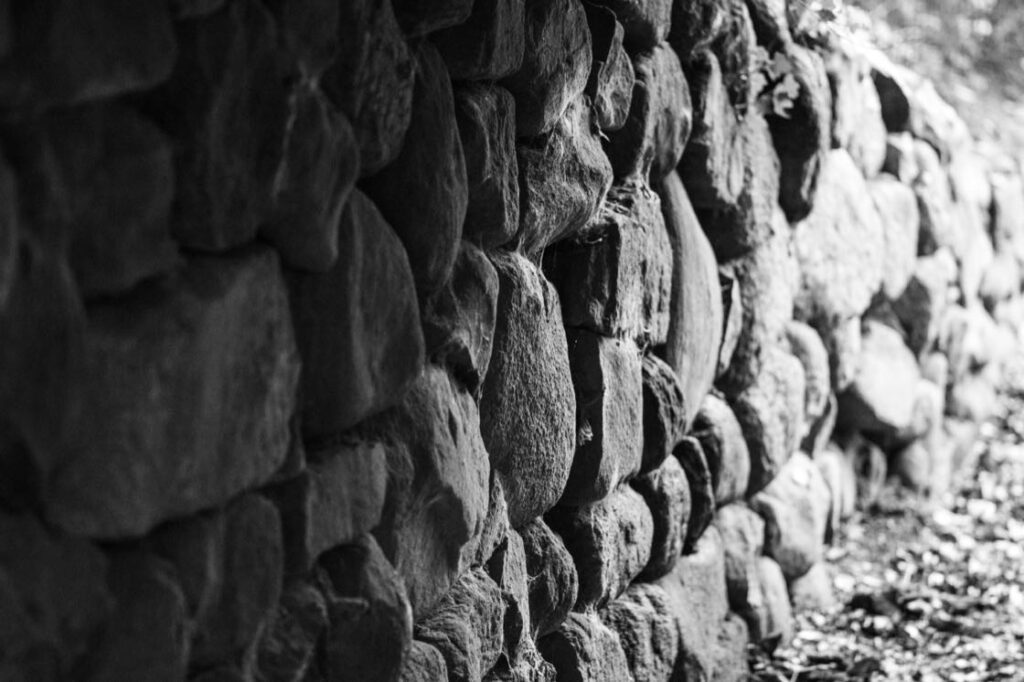
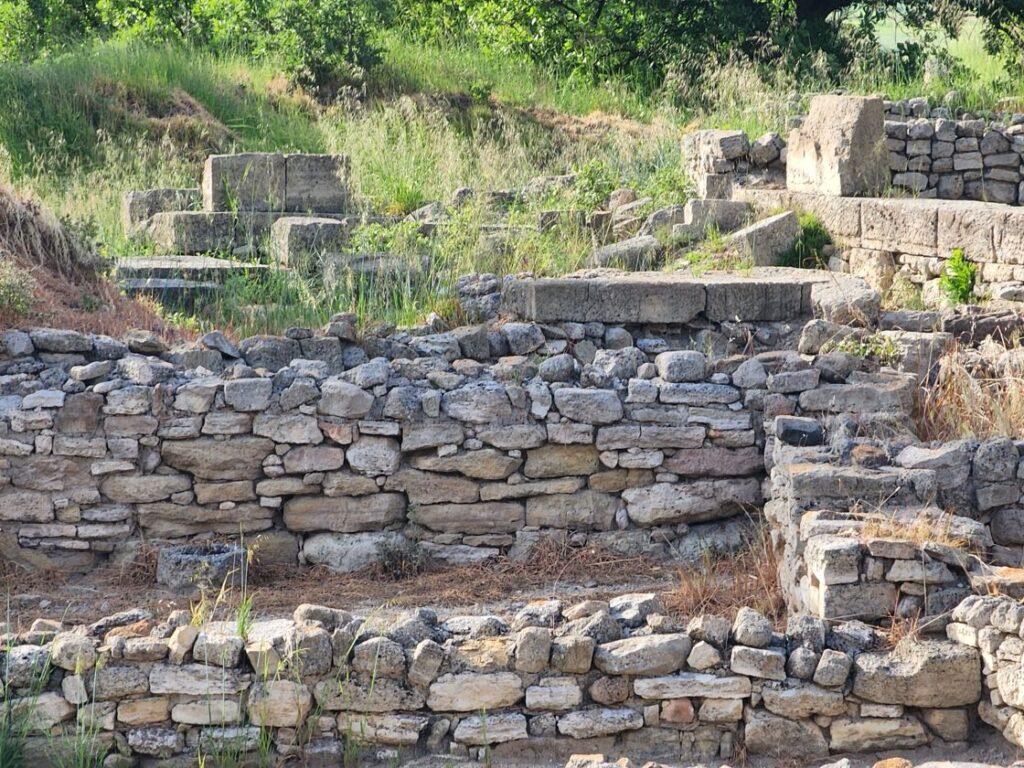
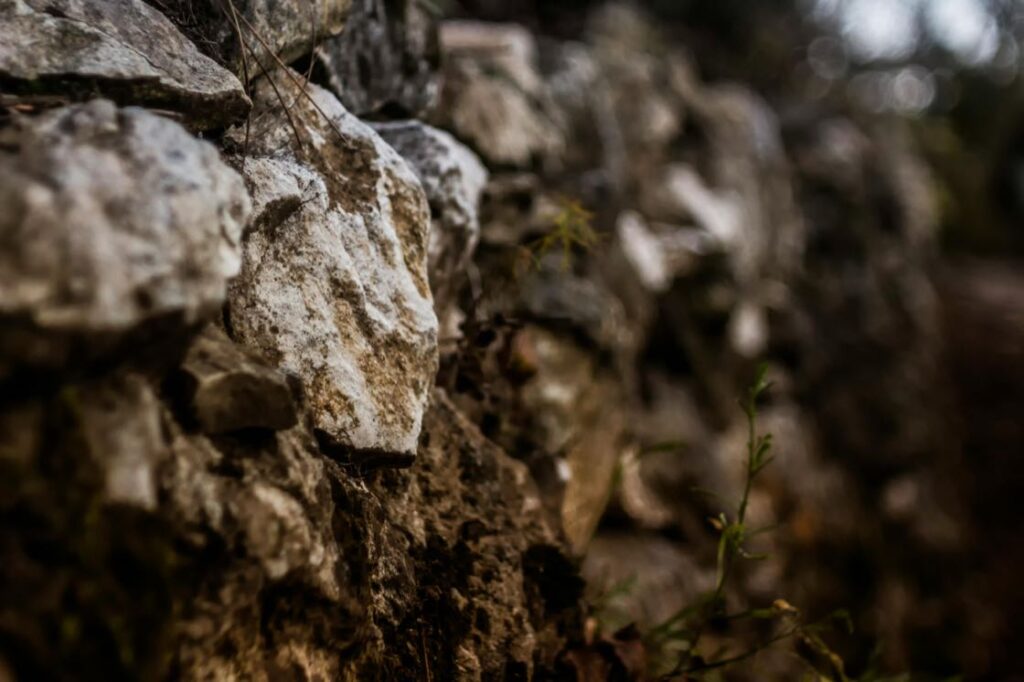
Among the pine forests and great granite rocks of the mountain, archaeological remains and stone structures attributable to the ancient Nuragic civilisation can still be found. In particular, the area preserves traces of an important stone wall and structures that bear witness to human presence on these heights in the remotest of times.
Scholars believe that the mountain heights may have served a strategic purpose, allowing people to keep watch over the land and sea. At a time when the Mediterranean represented both opportunity and danger, the ability to observe movements along the coast or approaching from the sea from a great distance was of vital importance to the Nuragic communities of Gallura.
Monte Pino must therefore have appeared as a natural “watchtower” over the territory: a high, protected place, immersed in forest and capable of communicating with other heights and settlements in inland Gallura.
Even today, the landscape reinforces this impression. The great wind-shaped rocks, ancient pine forests and stone structures set within the vegetation convey the sense of a place that preserves profound traces of Mediterranean memory.
Monte Pino’s archaeology is not merely historical evidence. It is an integral part of the landscape itself.